

- Index
- Price changes in a liquid basket, not the value of all items.
- Current snapshot
- 71.3 points; up 0.8% over the week.
- Segments
- The overall market and individual categories can move in different directions.
- Checking a spike
- Check sales and confirmation from trusted marketplaces.
- Weekly issue
- Published on Sundays; past issues are in the archive.
What the skin market index shows
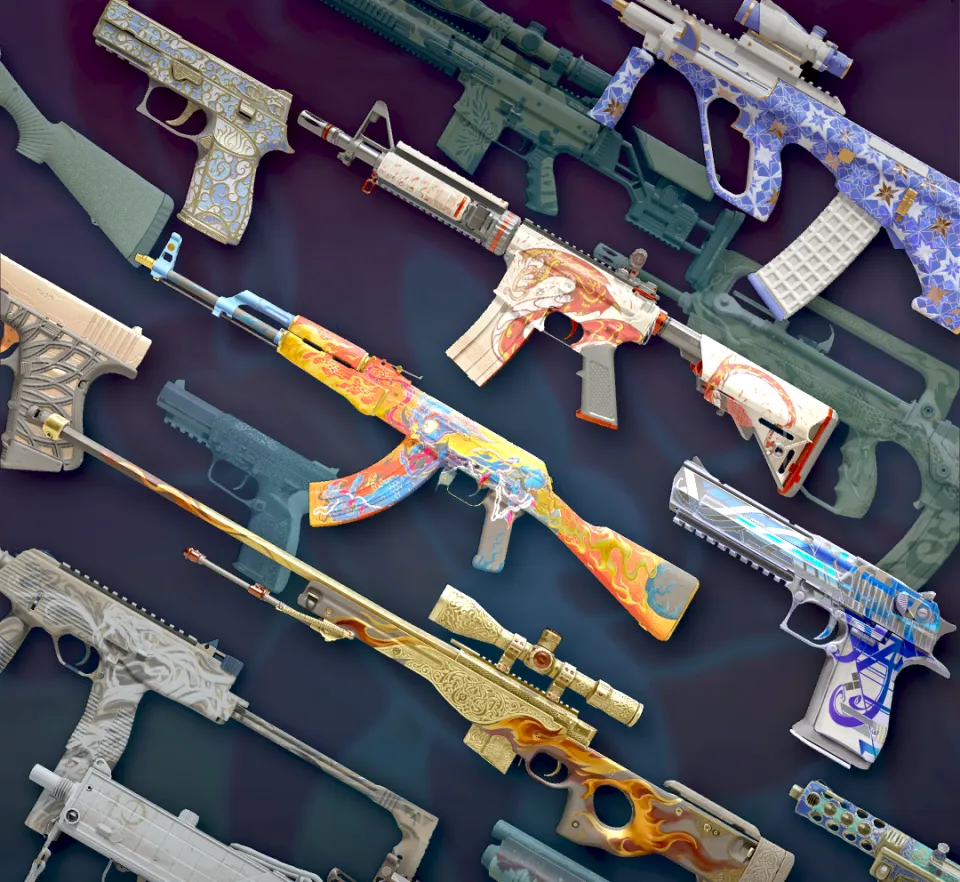
The Caseway skin market index tracks price changes for selected liquid items. It’s not the sum of all item prices or an estimate of the entire market’s value. Its purpose is to give you a general reference for whether the basket is getting more or less expensive. The items in it have enough sales to track their prices.
The starting point is 100 points on September 28, 2023. A value above 100 means the index is above that baseline; a value below 100 means it’s below. To see the direction over a specific period, check that change separately: the level against the baseline and the weekly change answer different questions.
- Liquid basket
- A set of items with enough sales to calculate the index.
- Item weight
- How much one item affects the index change.
- Median
- The middle value in an ordered set of numbers.
- Spread
- The price difference between Steam and the cheapest trusted marketplace.
The snapshot is dated November 7, 2026. The index stands at 71.3 points, up 0.8% over seven days. All current figures below refer to this snapshot. For the index itself and its trend, see our skin market analytics page.
Which items are in the basket and how their weights work
The index doesn’t include every available item. The selection limits the impact of items with few sales and excludes new releases for the first 60 days. The basket and weights are rebuilt every Monday.
- An average of at least 5 Steam sales per day over the past 28 days.
- The item’s weekly price is at least $1.
- At least 60 days have passed since release.
- Weight is based on 28-day turnover, capped at 5% of the segment’s turnover.
Turnover determines how much an item affects the calculation, while the weight cap stops one expensive item from pulling the index along with it. So a sharp spike in one item doesn’t mean the whole market made the same move.
The index is chain-linked: each day’s change is calculated as the weighted average price change across items in the basket. Daily changes build on one another to determine the index value. The Monday rebuild updates the basket and its weights; it doesn’t reset the index to 100 points.
How the CS2 skin market has changed over the past year
To judge where the market stands, compare the current level with a year ago and with the period's high and low points. A year ago, the index was at its yearly high, above the starting base. Now it's near its one-year low.
| Reference point | Date | Index, points |
|---|---|---|
| A year ago, also the yearly high | November 8, 2025 | 126.9 |
| One-year low | November 1, 2026 | 70.6 |
| Current snapshot | November 7, 2026 | 71.3 |
These points describe the movement but don't explain its causes or offer a forecast. A 0.8% rise over the last week tells you about direction over just seven days. Sitting near the one-year low tells you where the index stands within the range of the past year.
For context, here are Valve's changes in this window. They don't explain price moves on their own. July 16, 2025: Trade Protection launched. October 22, 2025: the Trade Up Contract began accepting five Covert items and returning a knife or gloves. May 22, 2026: Souvenir items became usable in contracts, and Souvenir-O-Matic arrived for the Cologne Major. September 2026: stickers could be applied to C4.
Knives, Gloves, and other segments: what to check
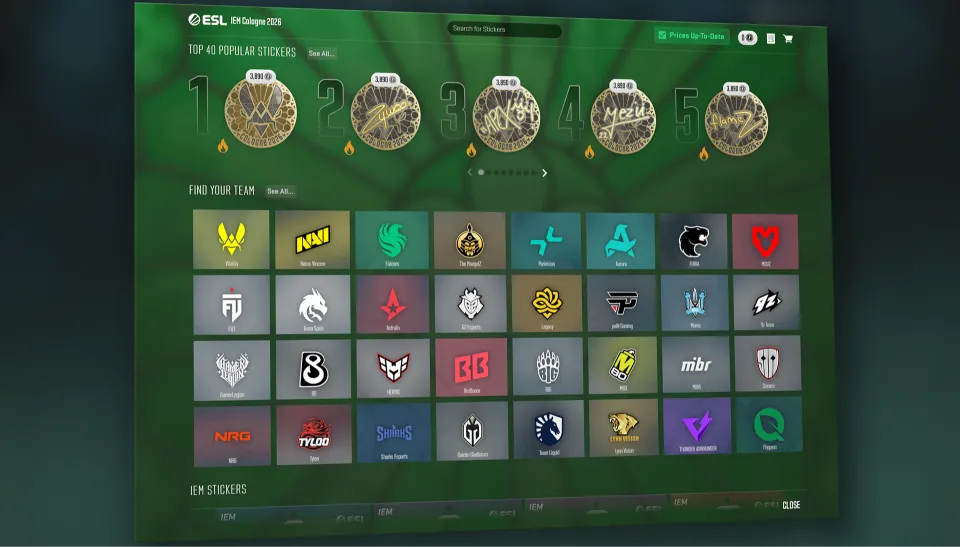
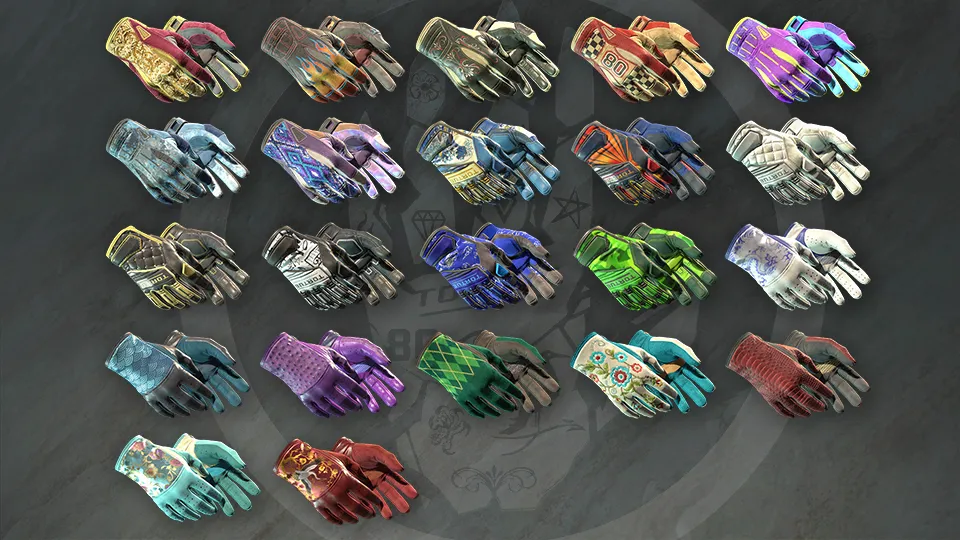
The overall index can hide differences between categories. If gloves are your focus, watching knives won't replace tracking the right segment. In this snapshot, knives and gloves rose over the week along with the overall index, while stickers fell 8.4%.
| Segment | Index, points | Change over 7 days |
|---|---|---|
| Knives | 46.5 | Up 1.3% |
| Gloves | 52.3 | Up 1.2% |
| Stickers | 14.3 | Down 8.4% |
The segment indexes also have a base of 100. A value of 46.5 or 52.3 is an index level, not an item price in dollars. To judge the current direction, look at the change over the selected period, not just the point value.
- The analytics page has indexes for the overall market, Knives, Gloves, rifles, pistols, Stickers, and agents.
- Each weapon has its own index on its stats page in the CS2 Skin Wiki.
- The blog homepage shows the daily market pulse: changes across segments and streaks showing how many days in a row a category has risen or fallen.
Start by choosing the segment and period you want to track. The daily pulse, weekly change, and level against the baseline answer different questions, so don’t use one in place of another.
How to read the “Market now” figures
It also helps to check turnover, market breadth, and the spread alongside the index. Each shows a different part of the picture: sales volume, how widely prices are rising or falling, and the price gap between Steam and trusted marketplaces.
Turnover: how much sold on Steam
Steam's turnover over the past seven days is about $12.93 million, according to the price data provider. That figure covers the whole market, cases included, not just the index basket. It's the sales volume for the period, not the value of all existing items. On its own, it doesn't show whether prices are rising or falling.
Market breadth: how many items rise or fall
Breadth shows how widely the move spread across the basket. The current snapshot tracks 3,025 items. They're split into three groups by their weekly change.
- 1,387 items rose by more than 1%.
- 1,015 items fell by more than 1%.
- 623 items barely changed.
There are more rising items than falling ones. But breadth isn't a substitute for the index. Breadth counts items, while the index weighs them. So read the number of rising items together with the basket's total change.
Spread: how much more expensive Steam is than marketplaces
In this snapshot, the Steam price is 30.4% above the price on the cheapest trusted marketplace. That's the median across the 100 best-selling items priced from $1, not the same gap for every item. The figure helps compare price levels but doesn't explain why the gap exists.
If you’re choosing where to sell a specific item, the overall spread won’t replace comparing its prices. Our How to Sell CS2 Skins guide explains how to compare Steam with marketplaces.
Weekly moves: when a price spike is confirmed
Only items in the liquid basket make the weekly moves list. It compares the median price for the current week with the median for the previous week. A big percentage change alone isn’t enough: the move must be unusual for that item.
- The move must exceed 3%.
- It must also be more than twice the item’s usual weekly fluctuation, measured over 12 weeks.
- Then its direction is compared with the change in the average price on trusted marketplaces.
The “confirmed” label means the average price on trusted marketplaces moved in the same direction. If marketplaces move the other way, the item goes into “Suspicious spikes.” When marketplace data isn’t available, the move is labeled “Steam only.”
What makes the “Suspicious spikes” list
This section covers items priced at $1 or more that changed by at least 15% over the week and are outside the basket because of low sales or because they moved against marketplaces. Each item has a reason listed, such as “9 sales this week” or “marketplaces: down 3%.”
Don’t treat a sharp Steam spike as a confirmed market-wide rise. A low sales count or marketplaces moving the other way is a reason to check the item. The “Steam only” label means there’s no data to confirm the move.
Confirmation means the marketplaces moved in the same direction. It doesn’t explain why prices rose or mean they’ll keep rising. If the issue or an article about the event doesn’t give a reason, you can’t work it out from the price change alone.
What’s in this week’s issue and where to find the archive
The weekly issue comes out on Sundays and covers Monday through Sunday.
- Index and segments: the week’s overall result and differences between categories.
- Moves: items with unusual price changes.
- Market events: context for the week.
- “Where the money goes”: how Steam turnover is split between segments.
For example, the September 21–27, 2026 issue looks at how Valve allowed Stickers to be applied to the C4. You can find every issue in the analytics archive. To understand the week, compare the overall index with the segment you care about, and check whether individual spikes are confirmed.
Frequently asked questions
What is the skin market index?
This measures price changes in a liquid basket, not the total value of all items. The Caseway index starts at 100 points and uses a chain-linked calculation: each day’s change factors in item price changes and their weights. The basket and weights are rebuilt every Monday.
Is the CS2 skin market rising or falling right now?
In this snapshot, the overall index rose 0.8% over seven days to 71.3 points, close to its one-year low. Knives gained 1.3%, gloves 1.2%, and stickers fell 8.4%. For a current answer, check the overall index and the segment you need over the same period.
Why did a skin’s price spike?
A price spike alone doesn’t tell you what caused it. Check the number of sales and the price direction on trusted marketplaces. If they’re moving the same way, the move is labeled “confirmed.” Opposite movement or a low sales count calls for caution. “Steam only” means there’s no marketplace data to check.
How do Steam prices compare with marketplace prices?
In this snapshot, the Steam price is 30.4% above the cheapest trusted marketplace, based on the median across the 100 best-selling items priced from $1. This is an overall spread figure, not the gap for any given skin. For a specific item, compare its own prices.