
Dota 2 counters win against a specific opponent more often than we’d expect based on both heroes’ overall strength. The later you pick, the more enemy heroes you can see and the better you can tailor your response. But you still need to consider the full draft, open roles, and heroes you know how to play.
- Advantage
- Measured in percentage points, not as a chance to win
- Picking
- Consider enemies, allies, your position, and your rank
- After the Draft
- Use items to answer specific threats
- Updates
- A week after each patch, and at least once every 30 days
What a Counterpick Does
A counterpick usually shifts the advantage by a few points. In the Caseway snapshot for patch 7.41f, half of all matchups fall within 1 percentage point in either direction, and 79% fall within 2. Only 1.5% of matchups have an advantage of 5 points or more.
Even the strongest counter can’t win the game for you. All ten heroes and the players affect the outcome. We’d pick a familiar hero who fits the team over an unfamiliar one chosen just to top the counter list.
How We Calculate Advantages in Percentage Points
First, we look at the hero’s win rate against the opponent. Then we subtract the result expected from their overall win rates: start at 50, add your hero’s deviation from 50, and subtract the opponent’s deviation from 50. This accounts for each hero’s overall strength, so a hero who’s simply strong on the patch won’t show up as a counter to everyone.
A 5-percentage-point advantage means that across 100 such matches, the hero wins about five more games than we’d expect based on both heroes’ overall strength. We only include a matchup if it has at least 300 matches. The more matches shown beside a figure, the more games went into that comparison.
Don’t read the advantage as your chance to win. A figure of 5 percentage points shows how much the matchup differs from its expected result, not the probability that you’ll win your game.
The Caseway snapshot covers 127 heroes and about 2 million matches across all ranks. Each rank bracket includes 16,002 hero-versus-opponent matchups. Each hero’s strongest counter has an advantage of 1.9 to 11.3 percentage points, and half of all heroes have an advantage above 4.7 points.
- Percentage point
- The difference between two percentages. Here, it measures how much a matchup differs from its expected result.
- Pair synergy
- How much more often two allied heroes win together than we’d expect from each hero’s overall win rate.
Why One Hero Counters Another
The figures reflect how the heroes’ abilities interact. These examples are from patch 7.41f and cover all ranks. They explain why each counter works; check the hero pages for current figures.
Mana: Anti-Mage against Medusa
The strongest matchup in the snapshot is Anti-Mage against Medusa, with an 11.3-point advantage across 4,624 matches. Mana Break burns mana on every attack and deals damage based on the amount burned. Medusa’s Mana Shield absorbs some damage by using her mana. In this matchup, burning mana means dealing damage and stripping away her defense.
Illusions and Clones vs. AoE Damage
Phantom Lancer creates illusions with Juxtapose and two more with Doppelganger. Leshrac has a 6.1-point advantage against him, while Tidehunter has a 5.8-point advantage. Pulse Nova damages nearby enemy units every second, while Ravage damages and stuns all nearby enemies. Against Meepo and his clones from Divided We Stand, Earthshaker has the strongest advantage at 8.5 points. Each enemy hit by Echo Slam creates an echo that damages nearby enemies.
Breaks Passive Abilities
Viper’s strongest matchup is against Huskar, with a 7.4-point advantage. Huskar’s Berserker’s Blood passive boosts his attack speed, magic resistance, and health regeneration as his health drops. Viper Strike slows its target, deals damage over time, and disables their passive abilities.
Debuff Immunity
Lifestealer is immune to debuffs while under Rage, but Doom and Enigma are his strongest counters, each with a 4.3-point advantage. Doom’s ability dispels positive effects on cast, then deals damage over time, prevents the target from using abilities, and stops them from restoring health.
Item Counters: How to Respond After You Pick
Once your hero is locked in, choose an item to deal with the specific threat. Against invisibility, you need a way to reveal the enemy; against evasion, you need a way to pierce it. The table groups items by what they counter.
| Threat | Items and Effects |
|---|---|
| Invisibility | Gem of True Sight reveals invisible units and drops when its carrier dies. Dust of Appearance reveals nearby invisible heroes. Sentry Ward reveals invisible units in its area. |
| Evasion | Monkey King Bar pierces evasion. |
| Spells and Crowd Control | Black King Bar grants spell immunity. Linken's Sphere blocks some enemy spells, while Lotus Orb reflects them. Pipe of Insight gives nearby allies a barrier against magic damage. |
| Abilities and Buffs | Orchid Malevolence and Bloodthorn silence enemies. Scythe of Vyse turns an enemy into a pig. Nullifier slows and dispels all positive effects from an enemy. |
| Illusions and Groups of Enemies | Battle Fury lets melee heroes deal cleave damage to nearby units. Radiance damages nearby enemies with an aura. Maelstrom attacks have a chance to release a chain lightning. |
| Attacks | Heaven’s Halberd disarms an enemy. Ghost Scepter makes you immune to physical damage but increases the magic damage you take. Blade Mail returns damage to its attacker. |
| Mana | Diffusal Blade burns mana with every attack and heavily slows the enemy. |
How to Account for Allies and Open Roles
We measure a hero’s synergy with an ally the same way we measure its advantage against an enemy. We compare how often the two heroes win together with the result expected from each hero’s overall strength. This helps you find a pick that both counters the enemy and fits your team.
Your position limits your options. In the snapshot, Phantom Lancer is played as a carry in 97% of matches, and Anti-Mage in 92%. Pudge can fill several roles: support in 35% of matches, hard support in 28%, offlane in 22%, and mid in 13%. A counter won’t help your team if nobody can play them in an open role.
Before comparing picks, choose your position. If you play several heroes, star them and turn on “My Heroes Only.” This filters out picks that don’t fit your role or hero pool.
The helper lists positions from 1 to 5: carry, mid, offlane, support, and hard support. A hero’s main position is the one they play in at least 10% of their matches. For allies, the helper suggests likely positions and shows which roles are open on your team.
Why Counters Change Across Ranks
Each rank bracket uses its own set of matches, so the counter rankings change. Choose your rank bracket (see the Dota 2 Ranks guide for medal order), not just “All Ranks.” The overall list may hide a strong counter for your skill level.
| Rank Bracket | Matches in the 7.41f Snapshot |
|---|---|
| Herald–Guardian | About 210,000 |
| Crusader–Archon | About 700,000 |
| Legend–Ancient | About 820,000 |
| Divine–Immortal | About 270,000 |
Across all ranks, Leshrac, Tidehunter, Underlord, and Axe are the top counters to Phantom Lancer. In the Herald–Guardian bracket, Leshrac leads with 7.9 points, followed by Timbersaw at 6.3 and Underlord at 5.4. In the Divine–Immortal bracket, Largo leads at 6.6, followed by Warlock at 6.1. Doom and Enigma top Lifestealer’s overall counter list, while Slardar leads in the Divine–Immortal bracket with a 6.5-point advantage.
Matchups with few games in a rank bracket are adjusted toward the all-rank average. The fewer matches a matchup has in the bracket relative to the 300-match threshold, the closer its figure moves to the overall average. This reduces the impact of small sample sizes.
Dota 2 Counter Picker: Find an Answer to the Full Enemy Draft
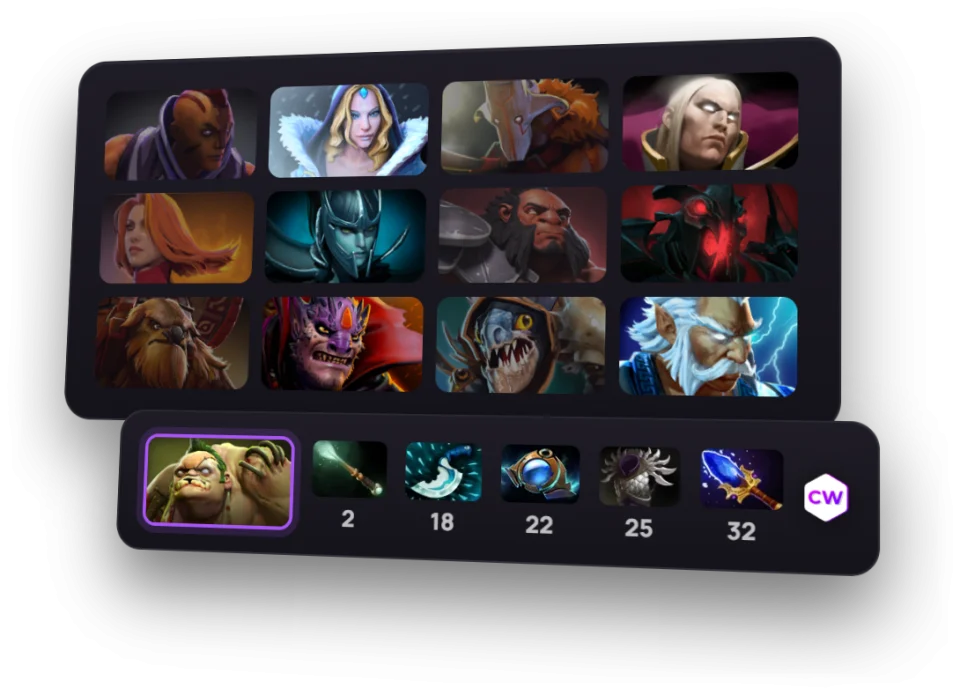
The draft helper lets you account for several enemies and allies at once. Start with the heroes already picked, then narrow the options by your position, rank, and hero pool.
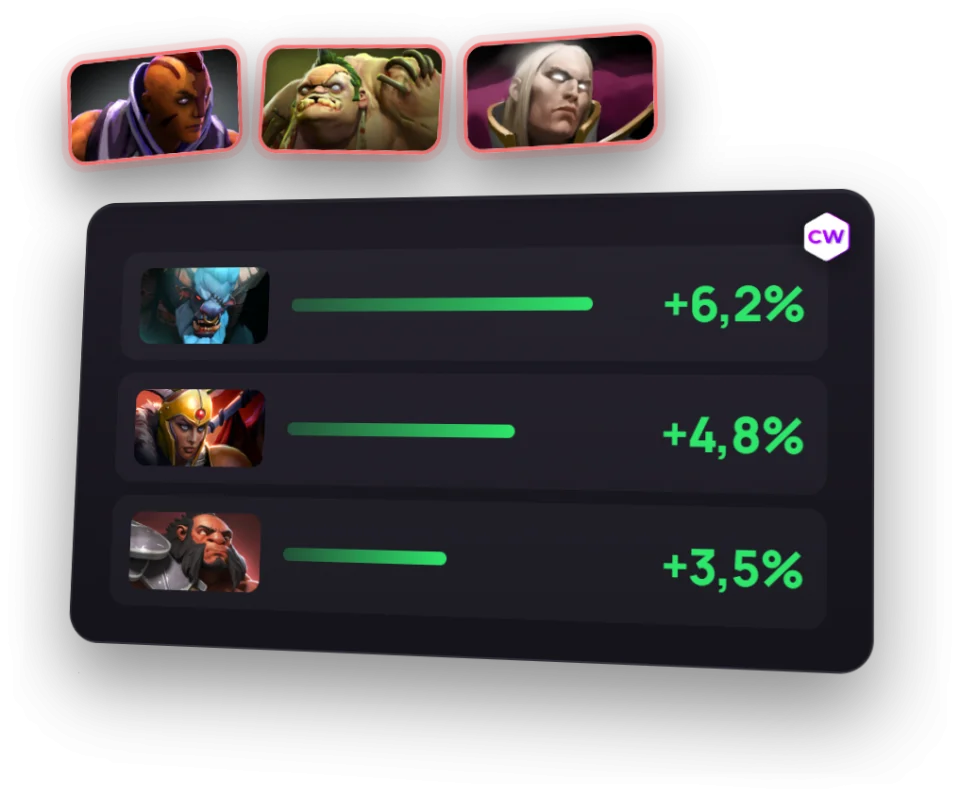
- EnemiesClick “Enemies” and select up to 5 enemy heroes from the grid. Search by name; press Enter to add the first result.
- AlliesSwitch to “Allies” and add up to 4 heroes. You’re the fifth player on the team.
- BansMove unavailable heroes to “Bans” so they won’t appear in the recommendations.
- Position and RankChoose your position under “Your Position” and your rank bracket under “Rank.” A green dot marks the roles still open on your team.
- My HeroesUnder “My Heroes,” click “Edit,” star the heroes you play, then click “Done.” Turn on “My Heroes Only” to limit the recommendations to them.
- RecommendationsCheck the “Who to Pick” list for the top 10 counters. Click the button to see up to 30 more.
“Total” adds the advantage against each enemy to the synergy with each ally. The “Against Enemies” and “With Allies” sections show these values separately, with a portrait and figure for each hero. Check them to see which matchups put a candidate above the rest.
“Draft Summary” combines every selected hero matchup: allies against enemies, plus pairings within each team. It rates hero synergies, not your chance to win. The helper saves your position, rank, and favorite heroes in your browser, while the draft is stored in the page URL. Share the link with your allies.
Where to Find Dota 2 Hero Counters
If you need a Dota 2 counter list for one hero, open their page. You’ll find “Strong Against,” “Weak Against,” and “Good With,” with tabs for each rank bracket. The page also shows position win rates, item builds by position with purchase timings, talents, and skill builds.
- Lifestealer and Phantom Lancer.
- Keeper of the Light and Drow Ranger.
- Spectre and Ursa.
- Lina and Luna.
- Anti-Mage and Medusa.
Find the other pages in the Dota 2 Heroes directory. Each page also answers common questions about that hero.
When Counterpick Rankings Change
Hero matchups change with patches. We take a new snapshot a week after a patch drops, once enough matches have been played, and at least once every 30 days. The patch number and snapshot date appear on the helper and hero pages. For the strongest heroes overall on the current patch, rather than against a specific opponent, see our Strongest Dota 2 Heroes guide.
These examples are from patch 7.41f. Check the hero page for current figures before you pick. We recommend learning how the mechanics interact instead of memorizing one counter list for a hero.
Frequently Asked Questions
When choosing a hero, look at both the matchup advantage and the data behind it: the patch, rank bracket, and number of matches.
What Is a Counterpick in Dota 2?
A hero who wins against a specific opponent more often than we’d expect based on both heroes’ overall strength. We measure the advantage in percentage points.
How do you find a hero’s counters?
Open a hero’s page, go to “Strong Against,” and select your rank bracket. If there are several enemies, add them to the draft helper alongside your allies.
Can a counterpick win the game on its own?
A counterpick shifts the matchup in your favor, but it doesn’t decide the game. All ten heroes and the players affect the outcome, and the advantage figure isn’t your chance to win.
Why do counters change across ranks?
Matchup results differ between rank brackets, so the counter rankings change too. Matchups with fewer games are adjusted toward the all-rank average.
How often are counterpick stats updated?
We take a new snapshot a week after a patch drops and at least once every 30 days. Check the helper or hero pages for the snapshot date and patch number.
Which items help against illusions and invisibility?
Against illusions and groups of enemies, melee heroes can use Battle Fury; Radiance and Maelstrom also help. Gem of True Sight, Dust of Appearance, and Sentry Ward reveal invisible units. Gem drops when its carrier dies.